
When it comes to writing copy that converts, facts and features alone won’t seal the deal. People make decisions emotionally first, and then justify them logically. That’s where emotional triggers in copywriting come in.
Whether you’re writing a landing page, an ad, or a social media post, understanding the emotions that move your audience is the difference between being ignored and sparking action. In this article, we’ll break down how to use emotional triggers in copywriting to connect with your audience and elevate your marketing strategy.
Why Emotional Triggers Work in Copywriting
Emotions shape human behavior far more profoundly than logic. While we like to believe our decisions are rational, research consistently shows that consumers are more likely to buy when an advertisement appeals to their feelings, even if they don’t fully grasp the technical specifications of the product. This is because emotional triggers in copywriting create a direct, intuitive connection with the audience, bypassing the analytical part of the brain.

Utilizing emotional triggers in copywriting helps you achieve several key marketing objectives:
- Build Trust with Your Audience: When your copy resonates on an emotional level, it feels more authentic and human. This authenticity builds a foundation of trust, making your brand feel reliable and relatable.
- Inspire Action and Conversions: Emotional appeals, such as urgency or the fear of missing out, are highly effective at motivating people to take immediate action, leading to higher conversion rates.
- Differentiate Your Brand from Competitors: In a crowded market, emotional triggers allow you to create a unique brand voice and personality. By tapping into specific feelings, you can set your brand apart and make it memorable.
- Drive Long-Term Loyalty: Brands that consistently connect with their customers on an emotional level foster a deeper bond. This emotional loyalty goes beyond a single purchase and encourages repeat business and brand advocacy over time.
The Psychology Behind Emotional Copywriting
Every human decision is influenced by psychological triggers. In marketing, these include:
- Fear – fear of missing out (FOMO) or making the wrong choice
- Happiness – associating your product with joy and satisfaction
- Trust – showing credibility and authenticity
- Urgency – motivating people to act quickly
- Belonging – appealing to community and shared identity
Types of Emotional Triggers You Can Use
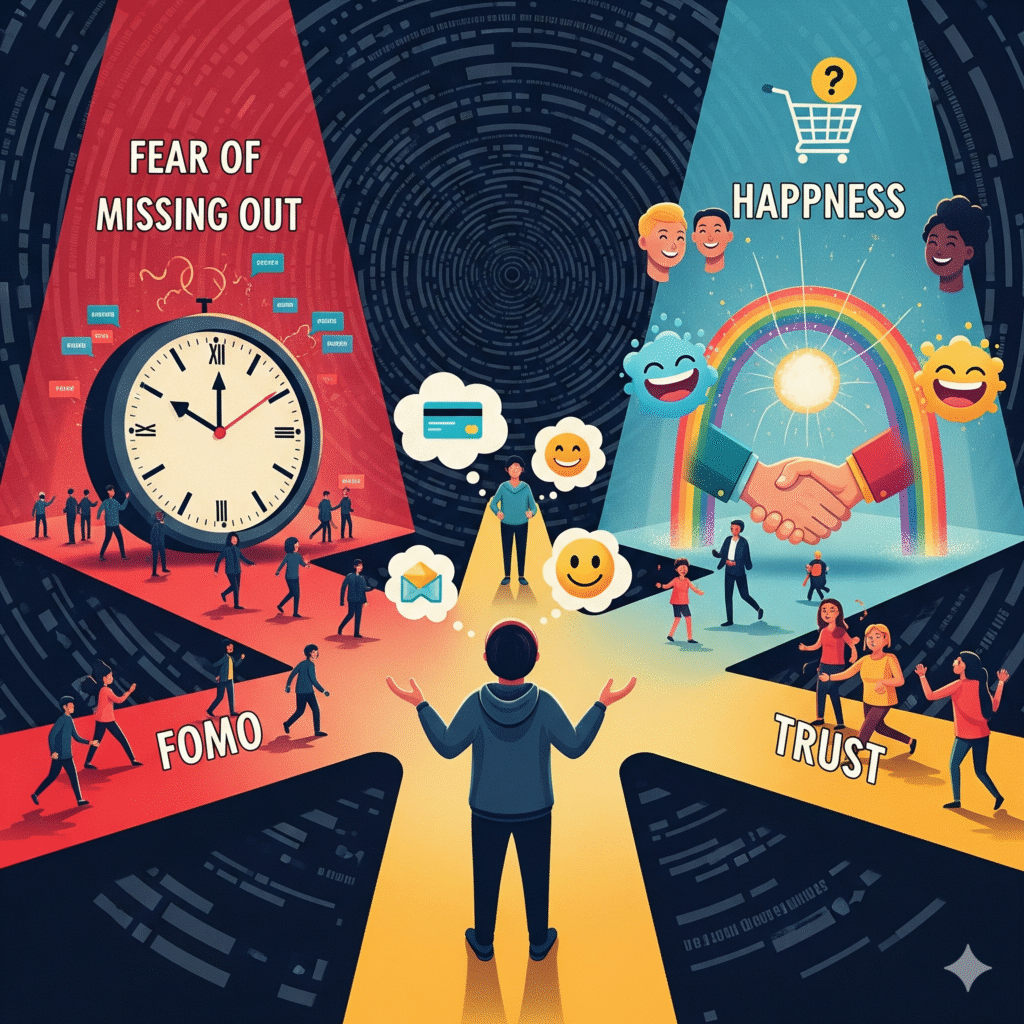
Here are the most effective emotional triggers in copywriting:
- Fear of Missing Out (FOMO) – “Limited stock available”
- Greed – “Get more for less with our exclusive offer”
- Curiosity – “What successful brands know that you don’t”
- Trust & Safety – “Trusted by 10,000+ professionals worldwide”
- Belonging – “Join a community of like-minded creators”
- Happiness – “Experience the joy of stress-free shopping”
How to Use Emotional Triggers in Copywriting to Connect with Your Audience
To make emotional triggers work, you need to:
- Know your audience: What motivates their decisions?
- Use storytelling: Narratives tap directly into emotions.
- Leverage social proof: Testimonials, reviews, and user stories trigger trust.
- Create urgency: Time-sensitive language encourages faster decisions.
- Test & optimize: Run A/B tests to see which triggers perform best.
Practical Examples of Emotional Copywriting
- Landing Page: “Don’t miss out on your chance to transform your business.” (Fear + urgency)
- Email Subject Line: “The secret marketers don’t want you to know” (Curiosity)
- Ad Copy: “Thousands of parents trust us to keep their kids safe online” (Trust)
Common Mistakes to Avoid
- Overusing fear-based tactics (can backfire)
- Sounding inauthentic or manipulative
- Ignoring cultural differences in emotional appeal
- Forgetting to test and measure impact
Conclusion
Emotions drive actions, and that’s why emotional triggers in copywriting are crucial for every marketer. By weaving in psychological triggers like trust, FOMO, and belonging, you can craft copy that doesn’t just get read—it gets remembered and acted upon.
FAQs
Q1: What are emotional triggers in copywriting?
A: Emotional triggers are psychological cues like fear, happiness, or urgency that influence how people respond to marketing messages.
Q2: Why are emotional triggers effective in copywriting?
A: Because people make decisions based on emotions first, and then justify with logic.
Q3: Can emotional triggers work in B2B marketing?
A: Yes. Even in B2B, decision-makers are humans who respond emotionally to trust, belonging, and urgency.
Q4: How do I find the right trigger for my audience?
A: Study customer pain points, run surveys, and test different emotional approaches in your campaigns.
Q5: Are there risks in using emotional copywriting?
A: Yes—if overdone, it can come off as manipulative. Balance emotion with honesty and value.